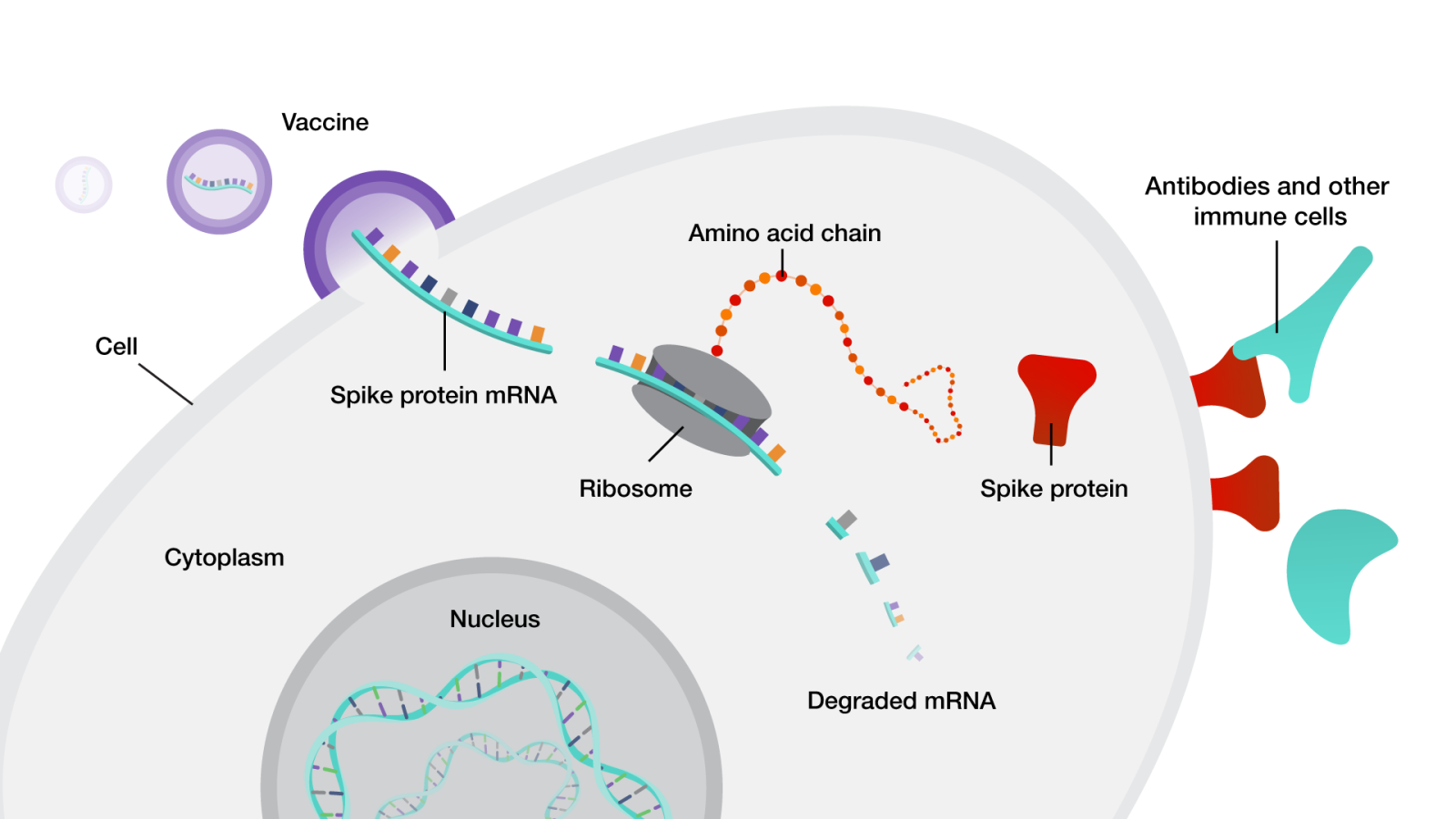
The mRNA Journey: From Fragile Molecule to Programmable Medicine
The molecular biology, delivery engineering and clinical evidence behind mRNA vaccines and programmable medicine.
Messenger RNA carries a cell's own genetic instructions to its protein-making machinery. For decades that made it interesting mainly to biologists. Then a series of separate advances, in how to protect the molecule, deliver it into cells, and stop the immune system from destroying it before it worked, turned mRNA into a technology platform that could be programmed to do almost anything: prevent an infection, or increasingly, treat a cancer that's already there.
-
Discovery
Messenger RNA is identified
Experiments established a short-lived molecule carrying instructions from DNA to ribosomes.
In 1961, researchers at Caltech and the Pasteur Institute independently confirmed a molecule that carries genetic instructions out of the cell nucleus to the ribosomes, the cell's protein factories. They called it messenger RNA, or mRNA. It exists only briefly before breaking down, a property that decades later became both the technology's biggest engineering obstacle and, once solved, one of its safety advantages: mRNA delivers its instructions and then disappears, without altering a cell's own DNA.
Sources & references 1 source
-
Research
Lipid vesicles deliver mRNA into cells
Liposomes carried globin mRNA into mouse cells, where it was translated into protein.
Researchers wrapped mRNA that coded for a blood protein called globin inside tiny fat-based bubbles called liposomes, then delivered them into mouse cells. The cells read the instructions and built the protein. It was the first proof that mRNA didn't have to be injected naked into a cell, wrapping it in a protective fatty shell could get it there intact, an idea that became essential decades later when COVID-19 vaccines needed to survive the trip from syringe to cell.
Sources & references 1 source
-
Research
Synthetic mRNA produces protein in cultured cells
Cationic lipids delivered laboratory-made mRNA and produced its encoded protein.
Researchers built mRNA entirely from scratch in the lab, rather than extracting it from cells, then used positively charged fat molecules to carry it into cultured cells. The cells produced the exact protein the synthetic mRNA coded for. This decoupled the technology from biological extraction. Once mRNA could be manufactured on demand, the door opened to designing it for any protein a researcher wanted a cell to make, not just ones nature already provided.
Sources & references 1 source
-
Research
Injected mRNA expresses protein in living muscle
Mouse experiments showed expression in vivo, while instability and inflammation limited practical use.
For the first time, researchers injected mRNA directly into the muscle tissue of live mice rather than cells in a dish, and the muscle cells produced the encoded protein. It confirmed the concept could work inside a living body, not just a lab dish. But two problems stood in the way of turning this into medicine: the mRNA broke down within hours, and the immune system often reacted to it as an invader, triggering inflammation. Solving both took another 15 years.
Sources & references 1 source
-
Breakthrough
Modified nucleosides reduce immune activation
Karikó and Weissman made synthetic mRNA less inflammatory, addressing a central obstacle.
NHGRI / NIH Katalin Karikó and Drew Weissman found that swapping one of the four chemical building blocks in synthetic mRNA, called nucleosides, with a modified version let the molecule slip past the immune system's alarm sensors almost unnoticed. Unmodified synthetic mRNA had been triggering inflammation severe enough to make it impractical as a medicine. This single substitution removed that obstacle, and became the technical foundation every mRNA vaccine developed since, including the COVID-19 vaccines, was built on.
Sources & references 1 source
-
Approval
The first COVID-19 mRNA vaccine is authorised
FDA emergency authorisation followed a large randomised trial; Moderna's vaccine followed a week later.
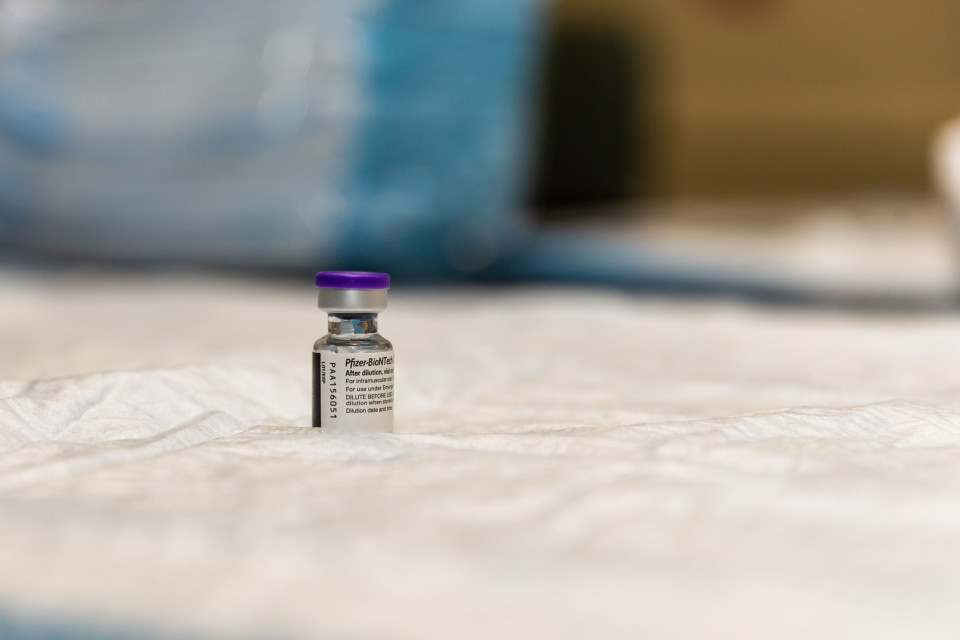
Lance Cpl. Kerstin Roberts / U.S. Navy The FDA granted emergency authorization to the Pfizer-BioNTech COVID-19 vaccine after a randomized trial involving tens of thousands of participants showed roughly 95% efficacy against symptomatic infection. It was the first mRNA vaccine ever authorized for use in the general public, less than a year after the pandemic began. Moderna's mRNA vaccine followed a week later. Both relied directly on the lipid-delivery and modified-nucleoside work developed decades earlier, technology that had never been tested at this scale before.
Sources & references 1 source
-
Recognition
Karikó and Weissman receive the Nobel Prize
The prize recognised nucleoside modifications that enabled effective mRNA vaccines against COVID-19.
The Nobel Committee awarded Katalin Karikó and Drew Weissman the Prize in Physiology or Medicine for the nucleoside modification discovered in 2005, the single change that let synthetic mRNA avoid triggering a damaging immune reaction. The prize came 18 years after the original discovery and three years after it had already been used in vaccines given to billions of people, an unusually direct line from a basic lab finding to a proven, widely deployed medicine.
Sources & references 1 source
Continue reading
-
Breakthrough
A personalized mRNA vaccine shows years-long protection against pancreatic cancer
Follow-up data from a Memorial Sloan Kettering trial found that patients whose immune systems responded to a personalized mRNA cancer vaccine stayed largely cancer-free years after treatment.
Surgeons at Memorial Sloan Kettering Cancer Center removed pancreatic tumors from 16 patients, then sent the tissue to BioNTech, which sequenced each tumor's mutations and built a unique mRNA vaccine for that patient, designed to teach their immune system to recognize up to 20 mutated proteins specific to their own cancer. Eight of the 16 patients mounted a strong immune response. Six of those eight remained cancer-free more than three years later, reported February 19, 2025, in Nature, with immune cells still circulating in their blood years after the last dose. This is the first mRNA application in this timeline built around treating existing disease rather than preventing infection, and it requires manufacturing a distinct vaccine for every single patient, a fundamentally different production model from a mass-produced vaccine.
What comes next?
Every step in this timeline solved one specific engineering problem: how to make mRNA, how to protect it, how to deliver it, how to stop the body from attacking it. The pandemic proved the platform could be manufactured and deployed at a scale nobody had tested before. What's happening now, personalized cancer vaccines built individually for each patient's own tumor, is a genuinely different kind of medicine than a mass-produced vaccine, and it's still early: these results come from small trials, not approved treatments.