More than a news website
Follow technology on your terms.
Read independent coverage in English and Arabic, add live headlines to your website, or follow the categories that matter to you through RSS.

Tu-Stroma Identified 92.3% of Ovarian Precursors in a Validation Set
A 506-person retrospective study found that the circulating RNA marker Tu-Stroma distinguished microscopic ovarian-cancer precursor lesions from healthy and benign samples. It detected 92.3% of precursor cases in a validation set, but prospective clinical studies are required before screening or surgical decisions change.
Read the storyUp next
More worth reading

Artificial Intelligence
AlphaGenome 2 Found 30% of Causal Variants in a Single-Cell Benchmark

Health
Silent Speech Let One ALS Participant Control Smart Devices Without Timing Cues

Sports Technology
100 g Head Impacts Carried 50% Concussion Risk in Mouthguard Data
Start here
Get the context first
Short explainers and chronological timelines that make the news easier to follow, no background required.
Explainers
Browse allWhy a Promising Cancer Biomarker Is Not Yet a Screening Test
A biomarker can separate known cases from controls yet perform differently in routine screening, where disease is rarer and patient conditions are more varied. Prospective validation must establish reproducibility, predictive value, clinical benefit and the harms of false results.
ExplainerHow AI Models Predict Which Cell Type a DNA Variant Affects
Sequence-to-function models combine long DNA sequences with cell-specific measurements to estimate how a variant may alter gene regulation. Their outputs can prioritize experiments, but they are predictions shaped by training data and require laboratory validation.
ExplainerHow Self-Paced Silent-Speech Brain-Computer Interfaces Detect Commands
A practical guide to the two-stage pipeline that detects a deliberate silent-speech event and then classifies the intended command, including why false activations, limited vocabularies and user-specific calibration matter.
ExplainerHow Instrumented Mouthguards Measure Head Impacts
Instrumented mouthguards place accelerometers and gyroscopes close to the skull by coupling them to the teeth. They can estimate straight-line and rotational head motion more directly than loose helmet sensors, but fitting, calibration, filtering and impact validation determine data quality.
Timelines
Browse all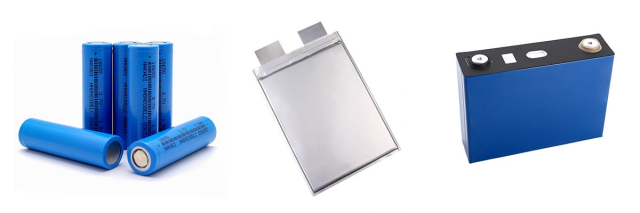
The Battery That Electrified Everything: From Lithium Chemistry to Electric Cars
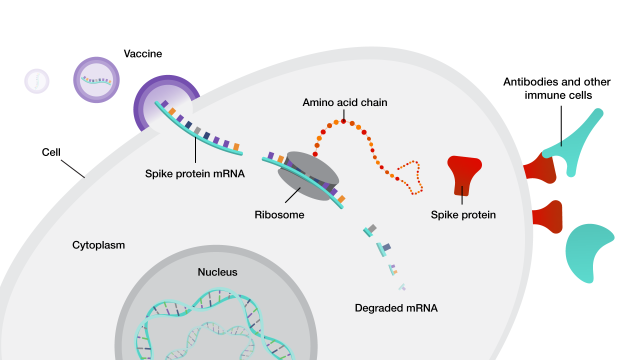
The mRNA Journey: From Fragile Molecule to Programmable Medicine

The Long Road to Humanoid Robots: From Walking Machines to AI Workers


Trending today
The stories NewTqnia readers are spending time with right now.


Explore the landscape
Discover by topic


The NewTqnia signal
The essential tech briefing, without the noise.
A concise weekly read for builders, leaders, and curious minds.
Thank you for subscribing!
You are now part of the NewTqnia Signal.
One concise email each week. Unsubscribe anytime.
