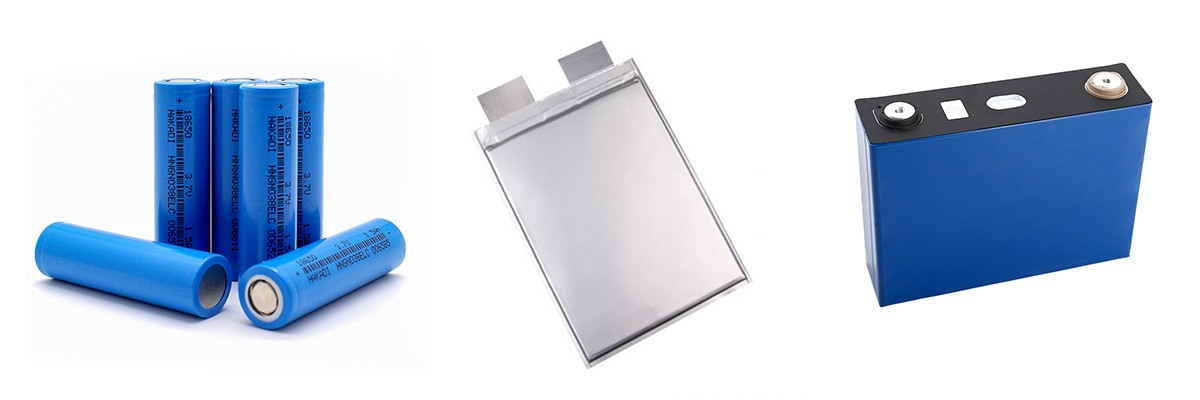
The Battery That Electrified Everything: From Lithium Chemistry to Electric Cars
How lithium-ion chemistry moved from laboratory electrodes to phones, electric vehicles and grid storage.
Lithium-ion was a cumulative invention: cathode, anode, electrolyte, separator, controls and mass manufacturing had to work together. This history follows the decisions that made portable electronics and long-range electric vehicles practical.
-
Invention
Whittingham proves rechargeable lithium can work
A titanium disulfide cathode could repeatedly accept and release lithium ions, establishing the intercalation principle behind modern rechargeable batteries, although the metallic-lithium anode remained hazardous.
Working at Exxon during the 1970s oil crisis, M. Stanley Whittingham built a rechargeable cell with a titanium disulfide cathode and a metallic-lithium anode. The layered cathode allowed lithium ions to move into and out of its structure without destroying it, a reversible process known as intercalation. The cell delivered about two volts, unusually high for its time, and proved that lithium’s light weight and electrochemical potential could support compact energy storage. It was not yet a safe consumer battery: repeated charging could form needle-like lithium dendrites, creating internal short circuits and a risk of fire. The experiment nevertheless established the core ion-shuttling concept later designs would retain.
Sources & references 1 source
-
Invention
Goodenough doubles the voltage with a cobalt-oxide cathode
John B. Goodenough’s lithium cobalt oxide cathode raised cell voltage to roughly four volts and stored more energy, providing the high-performance positive electrode commercial lithium-ion batteries needed.
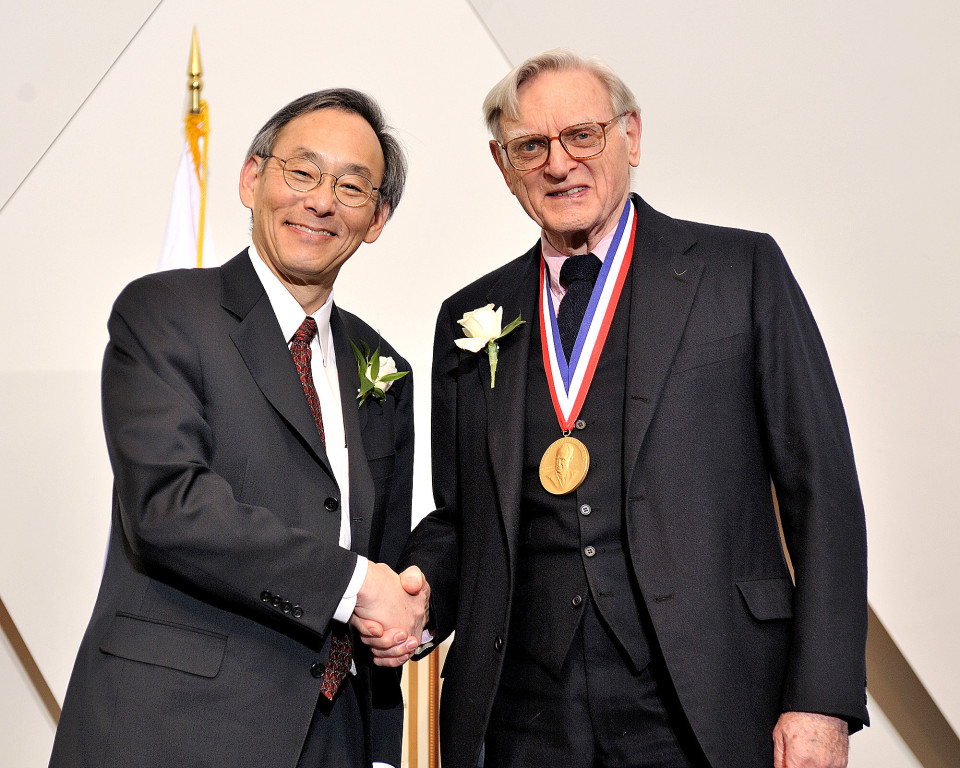
U.S. Department of Energy At the University of Oxford, John B. Goodenough and colleagues replaced titanium disulfide with lithium cobalt oxide. The oxide’s structure operated at a much higher potential, lifting cell voltage to around four volts and substantially increasing the energy available from a battery of the same size. Just as importantly, the cathode already contained lithium, opening the way to pair it with an anode that did not begin as dangerous metallic lithium. This materials breakthrough supplied one half of the architecture used in the first commercial lithium-ion cells and many later portable-electronics batteries. Cobalt, however, is costly and carries supply-chain, environmental and thermal-safety concerns, which later encouraged alternative cathode chemistries.
Sources & references 1 source
-
Invention
Yoshino removes metallic lithium from the practical cell
Akira Yoshino paired a carbon-based anode with a lithium-containing cathode, allowing ions to shuttle between two host materials and making a durable, safer rechargeable cell practical.
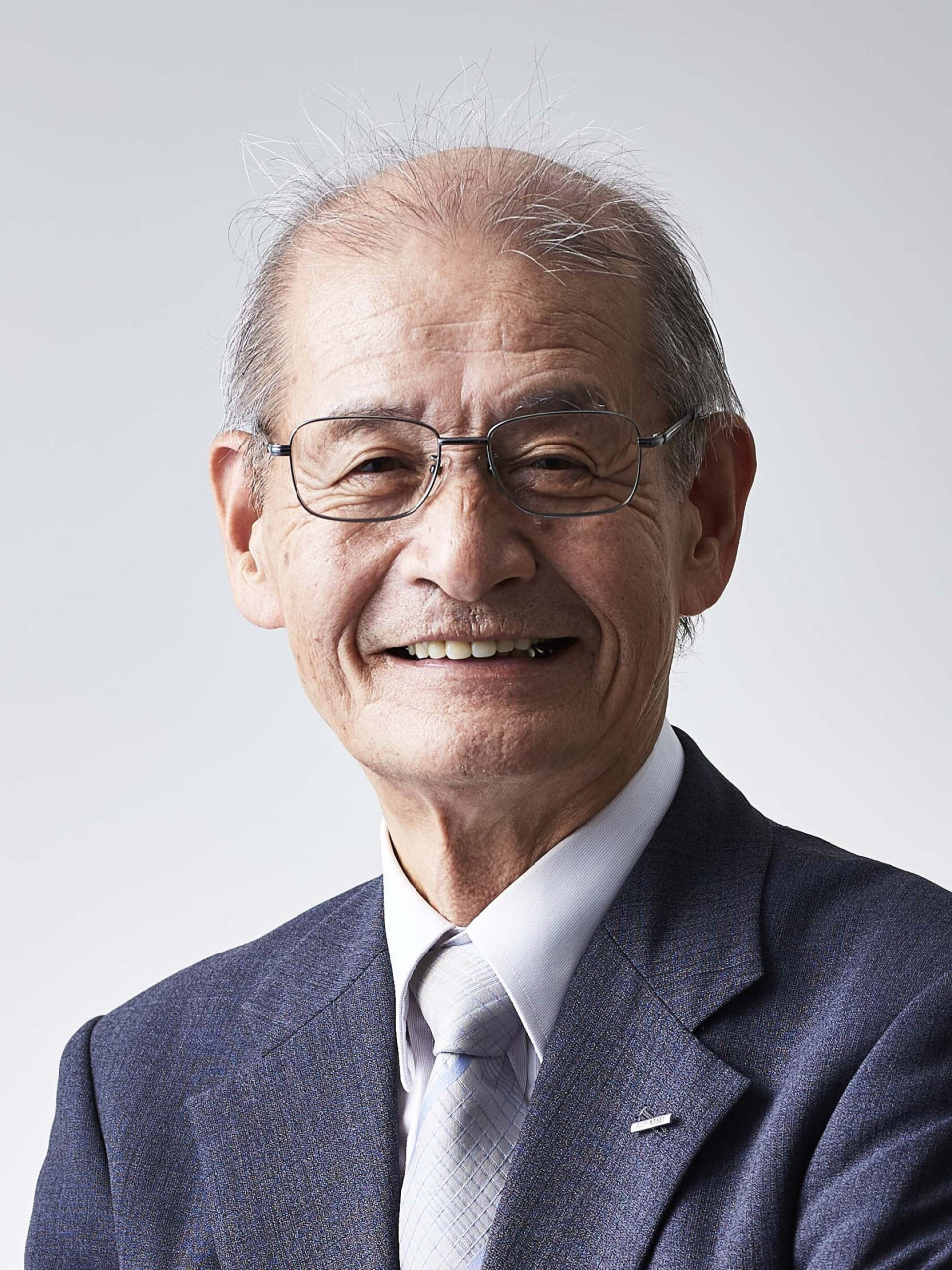
Government of Japan, Minister's Secretariat Personnel Division Akira Yoshino developed a cell in which lithium ions moved between a lithium cobalt oxide cathode and a carbon-based anode. Because both electrodes stored ions within their structures, the finished cell contained no free metallic lithium during normal operation. That sharply reduced the dendrite and fire problem that had limited earlier designs. Yoshino also demonstrated that the cell could survive repeated charging, remain stable when discharged and be manufactured in a practical format. The design completed the essential architecture of the modern lithium-ion battery: lithium ions shuttle through the electrolyte, while electrons travel through the external circuit to power a device. Safety still depends on separators, electronics and thermal control; the chemistry alone does not eliminate fire risk.
Sources & references 1 source
-
Product Launch
Sony brings lithium-ion batteries to the mass market
Sony’s 1991 commercial cells packed more rechargeable energy into less weight, first transforming camcorders and laptops and later enabling the mobile-electronics era.
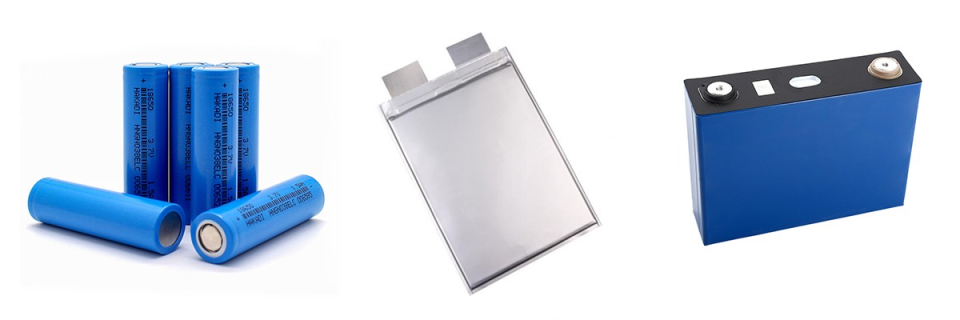
CRBAman Sony and battery partner Asahi Kasei turned the laboratory advances into a commercial product in 1991. The new cells combined a lithium cobalt oxide cathode with a carbon anode and included separators, electrolytes and control measures suitable for mass production. Compared with common rechargeable chemistries of the period, lithium-ion offered a higher operating voltage, greater energy density and no need for routine full discharge before charging. Camcorders were an early showcase, followed by laptops, digital cameras and mobile phones. The milestone was not a single final recipe: manufacturers continued refining carbon materials, electrolytes, separators and protective circuits. Lithium-ion became dominant because the whole cell system improved together, not merely because lithium itself stores energy efficiently.
Sources & references 1 source
-
Product Launch
The Tesla Roadster scales laptop cells into an electric-car pack
Tesla connected thousands of small commodity-format cells under one battery-management and cooling system, showing that lithium-ion could deliver both long electric range and sports-car performance.
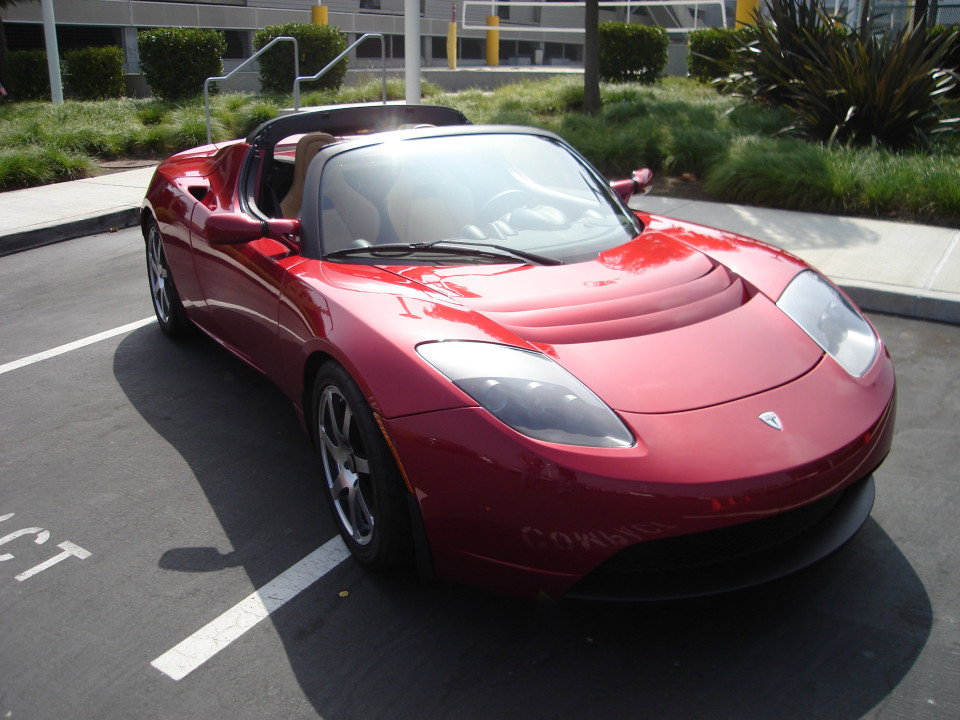
fogcat5 The original Tesla Roadster did not rely on one giant cell. Its pack combined thousands of cylindrical lithium-ion cells similar in format to those used in laptops, organised into modules and supervised by a battery-management system. Sensors, electronics and liquid cooling kept cell temperatures and charge levels within controlled limits, while isolation measures reduced the chance that one failed cell would affect the entire pack. The approach showed that mature consumer-cell manufacturing could be scaled into a vehicle with roughly 200 miles of rated range and rapid acceleration. It also demonstrated that the battery pack is an engineered system, not a box of cells: performance, lifespan and safety depend heavily on software, cooling, packaging and power electronics.
Sources & references 1 source
-
Recognition
The Nobel Prize recognises the three-step invention
The 2019 Chemistry Prize honoured Whittingham, Goodenough and Yoshino, underscoring that lithium-ion emerged through successive advances in ion storage, voltage and safety rather than one isolated discovery.
The Royal Swedish Academy of Sciences awarded the 2019 Nobel Prize in Chemistry to M. Stanley Whittingham, John B. Goodenough and Akira Yoshino for developing lithium-ion batteries. The award neatly reflected the technology’s cumulative history: Whittingham demonstrated reversible lithium intercalation, Goodenough produced a higher-voltage cathode, and Yoshino created a safer practical architecture without metallic lithium in the finished cell. By then, lithium-ion batteries powered phones, laptops, electric vehicles and growing amounts of stationary storage. The prize celebrated enormous social impact, but it did not imply that the technology was complete. Researchers and manufacturers still faced degradation, fire prevention, mineral sourcing, recycling and the need to reduce cost and environmental damage.
Sources & references 1 source
-
Policy
Europe makes batteries accountable across their lifecycle
The EU’s battery regulation introduced phased requirements for carbon-footprint reporting, recycled content, collection, material recovery and supply-chain due diligence, shifting attention beyond performance at the point of sale.
The European Union’s new battery framework treated batteries as products with impacts from mineral extraction through manufacturing, use, reuse and recycling. The regulation introduced phased obligations covering carbon-footprint declarations, recycled content, collection targets, recovery of valuable materials, labelling and supply-chain due diligence. It also laid the groundwork for digital battery passports for certain categories, making key product and sustainability information easier to trace. The rules reflect a central tension in electrification: batteries can reduce fossil-fuel use during operation while still imposing environmental and social costs upstream and at end of life. Implementation is gradual, and individual requirements apply on different dates, so the policy milestone marked the start of a long compliance transition rather than an immediate transformation.
Sources & references 1 source
Continue reading
What comes next?
No successor improves energy, safety, lifetime, minerals and cost at once. Solid-state, sodium-ion and other chemistries may win particular markets, while recycling and pack safety remain central.