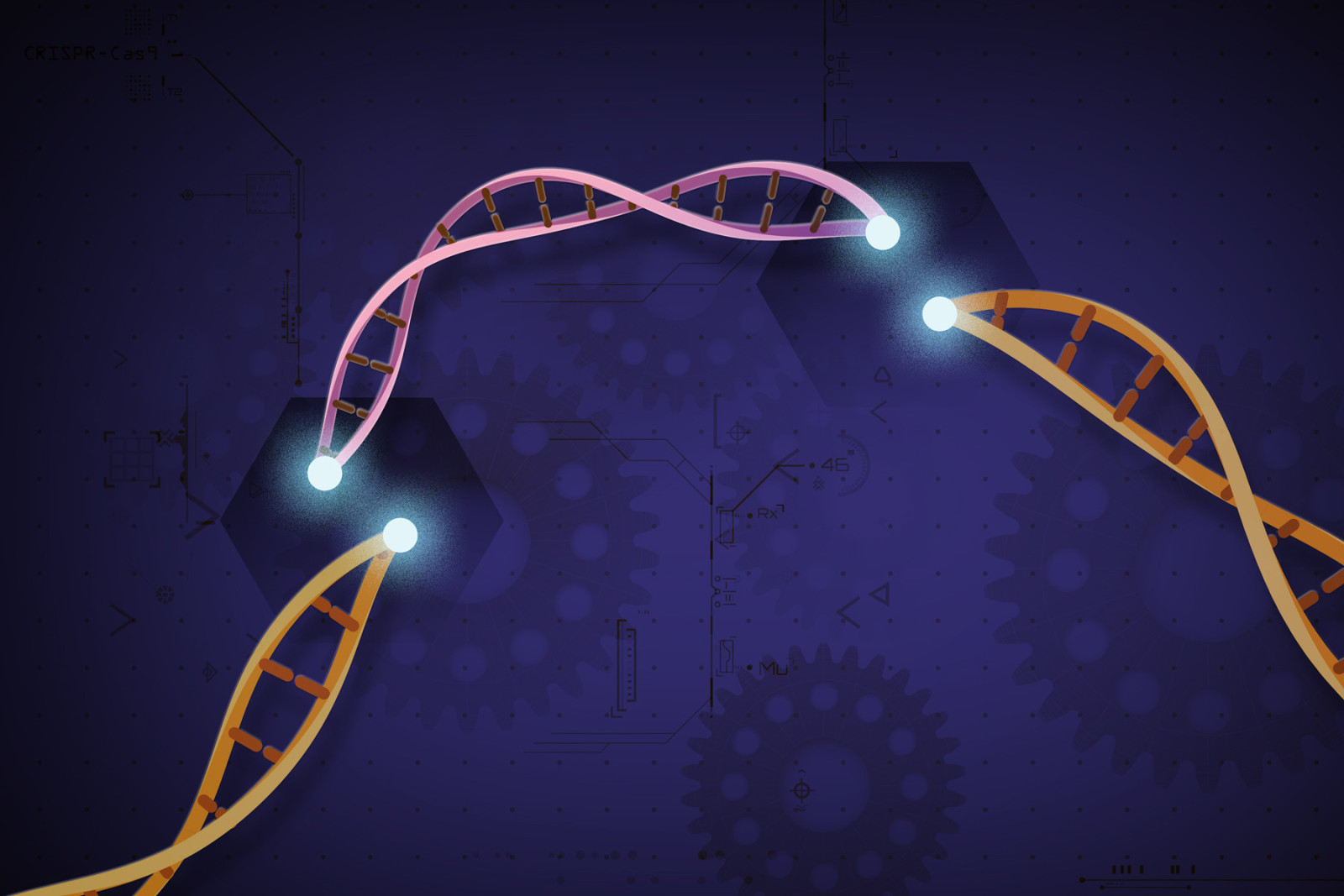
From Bacterial Defence to Medicine: The CRISPR Gene-Editing Revolution
How a bacterial immune system became a programmable editor, an ethical controversy and an approved treatment.
What Is CRISPR?
CRISPR stands for "clustered regularly interspaced short palindromic repeats," DNA sequences first spotted in bacteria decades before anyone understood their purpose. Paired with CRISPR-associated (Cas) proteins, they form a natural immune system that lets microbes remember and destroy viruses that have attacked them before. In the early 2010s, scientists repurposed this bacterial defence system into CRISPR-Cas9, a programmable tool that can cut DNA at almost any chosen site using a short guide RNA. That simple idea, cut here and let the cell repair itself, became the foundation for a new generation of gene-editing tools, including base editing and prime editing, and for the first approved CRISPR-based medicines.
How CRISPR Evolved From Bacterial Immunity to Medicine
The timeline below spans nearly four decades: from the first sighting of odd repeated DNA sequences in 1987, through the recognition in the mid-2000s that these repeats were a bacterial memory of past viral infections, to Jennifer Doudna and Emmanuelle Charpentier's 2012 demonstration that the system could be reprogrammed as a general-purpose editing tool. What followed was a rapid cascade: editing inside human cells within a year, the first, highly controversial edits to human embryos, new chemistries that edit DNA more precisely than the original cut-and-repair method, a Nobel Prize, and finally, in 2023 and 2024, the first CRISPR-based medicines reaching patients. Each milestone below builds on the one before it.
-
Discovery
Repeated bacterial DNA sequences are reported
Researchers observed regularly spaced repeats in E. coli without knowing their function.
The discovery came while researchers were sequencing a gene in <em>Escherichia coli</em>. They noticed an unusual pattern: short DNA sequences repeated at regular intervals, separated by unique fragments. Nothing at the time revealed that these sequences formed part of a microbial defence system. The observation mattered because it created the first record of the structure later called CRISPR, even though its biological purpose would remain unclear for years.
Sources & references 1 source
-
Discovery
CRISPR and Cas receive a common name
A shared name connected repeat families with nearby CRISPR-associated genes.
Researchers proposed the name CRISPR for this family of regularly spaced repeats and identified nearby genes that became known as Cas, for CRISPR-associated. A common vocabulary did not explain what the system did, but it allowed observations from different microorganisms to be compared. That helped turn several disconnected findings into one research field.
Sources & references 1 source
Continue reading
-
Discovery
Bioinformatics links CRISPR spacers to viral DNA
Three independent teams found that CRISPR spacers matched bacteriophage and plasmid sequences, first proposing that the system functions as an adaptive immune memory.
Francisco Mojica, Alexander Bolotin and Christine Pourcel independently noticed, using bioinformatic comparisons, that the unique 'spacer' sequences sitting between CRISPR repeats matched fragments of bacteriophage and plasmid DNA. That match was the conceptual leap: if bacteria were storing snippets of the viruses that had attacked them, CRISPR might function as a form of acquired immune memory. The hypothesis reframed a structural curiosity as a defence system, though it would take until 2007 to prove experimentally.
Sources & references 1 source
-
Research
CRISPR is shown to provide microbial immunity
Adding viral sequences to bacterial CRISPR arrays changed resistance to later infection.
Researchers inserted fragments of viral DNA into bacterial CRISPR arrays and showed that those changes altered resistance to later infection. The experiment provided direct evidence that the system stores a genetic memory of past invaders and uses it to recognise them again. CRISPR was therefore not merely an unusual DNA pattern; it was part of an adaptive microbial immune system.
Sources & references 1 source
-
Discovery
tracrRNA is identified as a key CRISPR component
Emmanuelle Charpentier's team discovered tracrRNA, an RNA molecule required to process crRNA in Streptococcus pyogenes, a finding that opened the door to engineering Cas9.
While studying Streptococcus pyogenes, Emmanuelle Charpentier's team discovered a small RNA molecule, tracrRNA, that base-pairs with the CRISPR repeat sequences and is essential for processing crRNA into its mature, functional form. The finding revealed a missing piece of the Cas9 system's machinery. A year later, that same tracrRNA would be fused with crRNA into a single guide RNA, the design that let Doudna and Charpentier turn Cas9 into a programmable tool.
Sources & references 1 source
-
Breakthrough
Cas9 becomes a programmable DNA-cutting tool
Engineered guide RNA directed Cas9 to chosen DNA sequences, distilling bacterial defence into an editing mechanism.
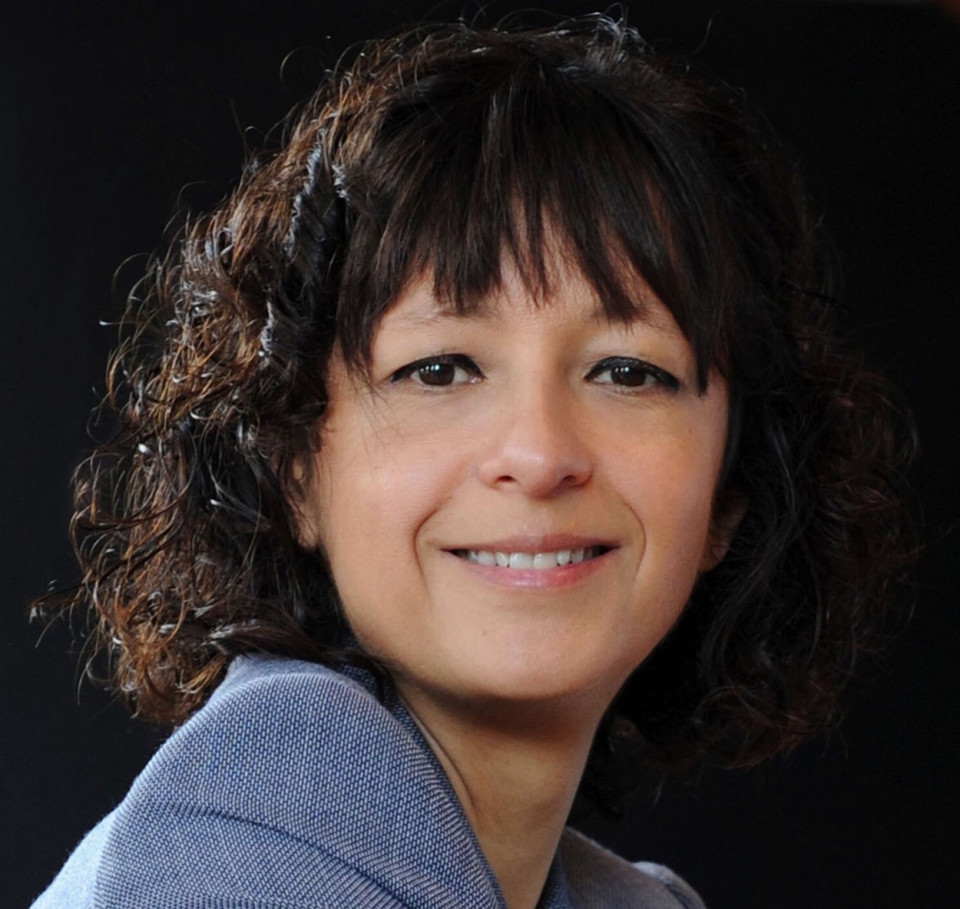
Hallbauer & Fioretti / Eva-Maria Diehl Jennifer Doudna, Emmanuelle Charpentier and colleagues showed that an engineered guide RNA could direct the Cas9 enzyme to cut a chosen DNA sequence. The crucial simplification was programmability: researchers could change the guide sequence instead of designing a different protein for every target. The study established the core mechanism, but precise cutting in a test system was still far from a safe human treatment.
Sources & references 1 source
Continue reading
-
Research
Teams edit genes inside human cells
Independent demonstrations moved CRISPR from purified molecules into mammalian cells.
Ernesto del Aguila III / NHGRI Independent teams demonstrated that CRISPR-Cas9 could edit selected genes inside mammalian, including human, cells. Moving from purified molecules into living cells rapidly expanded its usefulness for studying gene function, building disease models and exploring agricultural and medical applications. It also exposed practical problems such as delivery, unintended edits and variable results, all of which matter before clinical use.
Sources & references 1 source
Continue reading
-
Research
Scientists edit non-viable human embryos, igniting a global debate
A Chinese team used CRISPR-Cas9 on non-viable tripronuclear embryos, achieving low efficiency and off-target edits. The first study of its kind triggered urgent calls for oversight of heritable gene editing.
A team led by Junjiu Huang at Sun Yat-sen University injected CRISPR-Cas9 into 86 non-viable tripronuclear human embryos, aiming to correct the mutation behind beta-thalassaemia. Only 4 of 71 surviving embryos carried the intended edit, and the procedure produced mosaicism and off-target mutations. Nature and Science had declined to publish the work over ethical concerns before Protein & Cell did; the study nonetheless proved human embryos could be edited and forced the field to confront, years before He Jiankui's 2018 experiment, how unready the technology was for anything heritable.
Sources & references 1 source
-
Breakthrough
Base editing rewrites single DNA letters without cutting the double helix
David Liu's lab combined Cas9 with an enzyme that converts one DNA base into another directly, correcting point mutations while avoiding the double-strand breaks that cause unwanted insertions and deletions.
Alexis Komor and David Liu's team fused a catalytically disabled Cas9 to a cytidine deaminase enzyme, creating a 'base editor' able to convert a C:G base pair directly into a T:A pair at a chosen site. Because the DNA backbone was never cut, the approach produced far fewer random insertions and deletions than standard Cas9. It gave researchers a second precision tool alongside the original cut-and-repair method, one better suited to correcting the many genetic diseases caused by single-letter mutations.
Sources & references 1 source
Continue reading
-
Research
The first CRISPR-edited cells are infused into a patient
A team in Chengdu, China infused a lung cancer patient with T cells whose PD-1 gene had been disabled by CRISPR-Cas9, the first time an edited human cell product was given to a person.
At West China Hospital in Chengdu, oncologist Lu You's team extracted T cells from a patient with advanced non-small-cell lung cancer, used CRISPR-Cas9 to knock out the gene for PD-1, a protein that normally restrains immune attacks, then re-infused the edited cells. It was the first time a CRISPR-edited human cell product had ever been given to a person, months ahead of comparable US trials. The Phase 1 study, eventually enrolling 22 patients, would later confirm the approach was feasible and safe, opening the door to CRISPR-based cell therapies more broadly.
Sources & references 1 source
-
Ethics
Edited babies expose a governance failure
Heritable embryo editing without compelling medical justification prompted international condemnation.
Chinese researcher He Jiankui announced the birth of children whose embryos had been edited, without a compelling medical need or acceptable oversight. Because changes made to embryos may be inherited, any unintended effect could extend beyond one patient. The episode drew international condemnation and showed that technical capability can advance faster than the ethical rules, transparency and governance needed to control its use.
Sources & references 1 source
-
Breakthrough
Prime editing enables precise DNA 'search and replace'
David Liu's lab unveiled prime editing, which fuses a modified Cas9 with a reverse transcriptase to write new genetic sequences directly, without double-strand breaks or a separate donor DNA template.
Andrew Anzalone in David Liu's lab fused a Cas9 nickase to an engineered reverse transcriptase, guided by a 'prime editing guide RNA' that both finds the target site and encodes the desired edit. The system can perform targeted insertions, deletions and all 12 possible base-to-base conversions without cutting both DNA strands or needing a separate donor template. Prime editing is estimated to be able to correct roughly 90% of known pathogenic human genetic variants, making it one of the most versatile editing tools developed to date.
Sources & references 1 source
Continue reading
-
Award
Charpentier and Doudna win the Nobel Prize in Chemistry
The Royal Swedish Academy of Sciences awarded the Nobel Prize in Chemistry to Emmanuelle Charpentier and Jennifer Doudna for developing CRISPR-Cas9 as a genome-editing method, the first science Nobel shared by two women.
Hallbauer & Fioretti / Eva-Maria Diehl The Nobel committee recognised Charpentier and Doudna's 2012 work reprogramming CRISPR-Cas9 as a genome-editing method, describing it as one of gene technology's sharpest tools. It was the first Nobel Prize in the sciences shared by two women, awarded within a decade of the discovery it honoured, a notably short gap that reflected how quickly CRISPR had reshaped biology, agriculture and medicine.
Sources & references 1 source
-
Breakthrough
First evidence that CRISPR can edit genes directly inside the body
Intellia and Regeneron reported that a single intravenous infusion of NTLA-2001, a CRISPR therapy delivered by lipid nanoparticles, cut disease-causing TTR protein levels by up to 87% in patients with a rare amyloid disease.
Unlike Casgevy, which edits cells outside the body, NTLA-2001 is infused directly into the bloodstream, packaged in lipid nanoparticles that carry it to the liver, where it permanently switches off the gene producing a misfolded protein behind transthyretin amyloidosis. A single dose lowered serum TTR protein by up to 87% within weeks. It was the first published clinical evidence that CRISPR components could be delivered into a living patient and edit a target gene in place, without ever removing a single cell.
Sources & references 1 source
Continue reading
-
Approval
FDA approves the first CRISPR-based treatment
Casgevy was approved for certain sickle-cell patients; cells are edited outside the body and returned after intensive conditioning.
The FDA approved Casgevy for certain patients aged 12 and older with sickle-cell disease. Clinicians collect a patient’s blood-forming stem cells, edit them outside the body to increase fetal haemoglobin, and return them after intensive conditioning. The approval proved that CRISPR can deliver clinical benefit, but the process remains demanding, expensive and available only through specialised treatment centres.
Sources & references 1 source
-
Approval
Casgevy's approval expands to a second blood disorder
The FDA approved Casgevy for transfusion-dependent beta thalassemia, weeks after its sickle-cell approval, followed by UK and EU authorizations, extending the CRISPR therapy to tens of thousands more eligible patients.
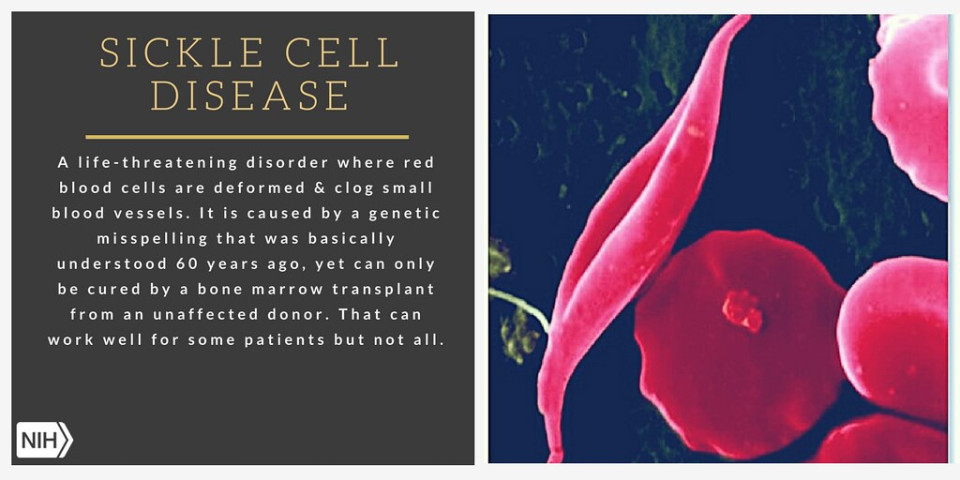
National Institutes of Health Weeks after its sickle-cell approval, the FDA cleared Casgevy for transfusion-dependent beta thalassaemia, a disease that shares the same underlying gene target. The European Commission followed in February 2024, and UK and other regulators granted authorisations across 2023 and 2024, together making more than 8,000 additional patients eligible. The rapid, multi-geography rollout showed that a single approved CRISPR therapy could scale into a genuine clinical product line rather than a one-off treatment.
Sources & references 1 source
What comes next?
CRISPR-Cas9 vs. Base Editing vs. Prime Editing
- CRISPR-Cas9 cuts both strands of DNA at a chosen site, relying on the cell's own repair machinery to disable or replace a gene. It is powerful and versatile, but repair can be unpredictable, producing small random insertions or deletions.
- Base editing fuses a disabled Cas9 with an enzyme that directly converts one DNA letter into another (for example, C to T), correcting many point mutations without cutting both DNA strands.
- Prime editing pairs a modified Cas9 with a reverse transcriptase to "search and replace" a short stretch of DNA directly, capable of insertions, deletions, and all 12 possible base-to-base conversions with even fewer unwanted edits.
In general, Cas9 suits disabling genes or making larger changes, while base and prime editing trade some scope for greater precision when correcting the point mutations behind many inherited diseases.
What Comes Next?
Casgevy proved that a CRISPR-edited medicine can reach patients, but it still requires removing cells from the body, editing them in a lab, and reinfusing them after intensive chemotherapy-based conditioning, a costly, months-long process available at a limited number of hospitals. The next frontier is in-vivo editing: delivering CRISPR components directly into the body, as NTLA-2001 first demonstrated in 2021. Companies are now testing in-vivo CRISPR for high cholesterol, hereditary angioedema and other liver-related diseases, while base and prime editing move through early human trials for blood disorders and other genetic conditions. Delivery beyond the liver, long-term safety monitoring, and cost remain the major open questions.
Frequently Asked Questions
When was CRISPR discovered?
Repeated DNA sequences that would later be named CRISPR were first reported in bacteria in 1987, though their function remained unknown for nearly two decades. Scientists proposed in 2005 that they formed part of a bacterial immune system, and proved it experimentally in 2007.
Who developed CRISPR gene editing?
Many scientists contributed to the discovery over decades. Jennifer Doudna and Emmanuelle Charpentier, building on Charpentier's 2011 discovery of tracrRNA, showed in 2012 that CRISPR-Cas9 could be reprogrammed as a general-purpose DNA-cutting tool, work that won them the 2020 Nobel Prize in Chemistry. Feng Zhang and others soon extended the system to edit genes inside living cells.
When did editing human cells begin?
Researchers first used CRISPR-Cas9 to edit genes inside cultured human cells in January 2013, just months after the tool was reprogrammed. Editing of human embryos followed in 2015.
What was the first approved CRISPR treatment?
Casgevy (exagamglogene autotemcel), developed by Vertex Pharmaceuticals and CRISPR Therapeutics, became the first approved CRISPR-based medicine when UK regulators authorized it in November 2023, followed by US approval for sickle cell disease in December 2023.
Can CRISPR edit genes directly inside the body?
Yes, though it remains an emerging approach. Casgevy edits cells outside the body before reinfusing them, but in 2021 Intellia and Regeneron showed that a CRISPR therapy delivered intravenously could edit a gene directly inside a patient's liver, without ever removing cells from the body.