Timeline milestone
AI Improves Non-Invasive Brain-to-Text, but Does Not Read Free Thoughts
From From Brain Signals to Digital Speech: The Evolution of Brain-Computer Interfaces
-
Research
AI Improves Non-Invasive Brain-to-Text, but Does Not Read Free Thoughts
Brain2Qwerty decoded typed sentences from non-invasive brain recordings under a constrained task, illustrating both the promise and the boundary of modern neural decoding.
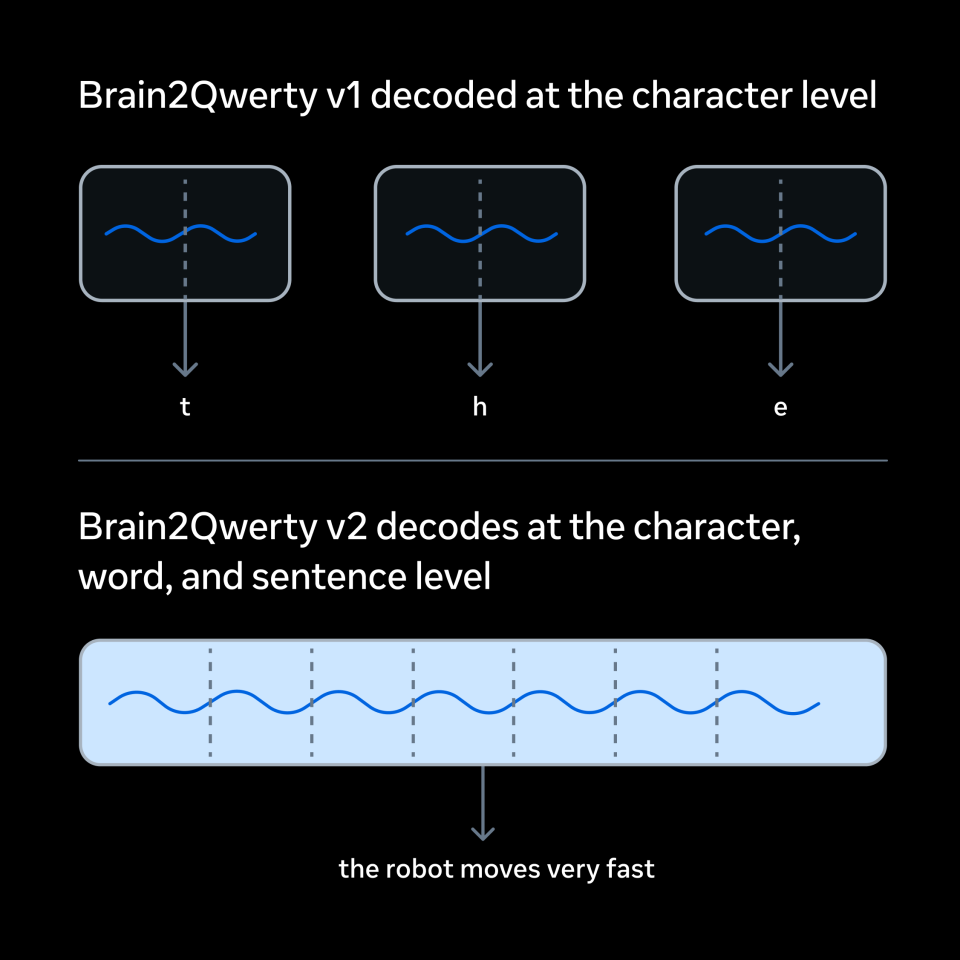
NewTqnia Machine learning can extract task-linked patterns from weak signals measured outside the skull, avoiding surgical implantation. The system did not recover unrestricted private thoughts: it relied on participants performing a known typing task, specialized equipment and language-model constraints. Non-invasive convenience still trades away signal detail and portability.
Sources & references 1 source
Continue reading